
Good Life Coffee
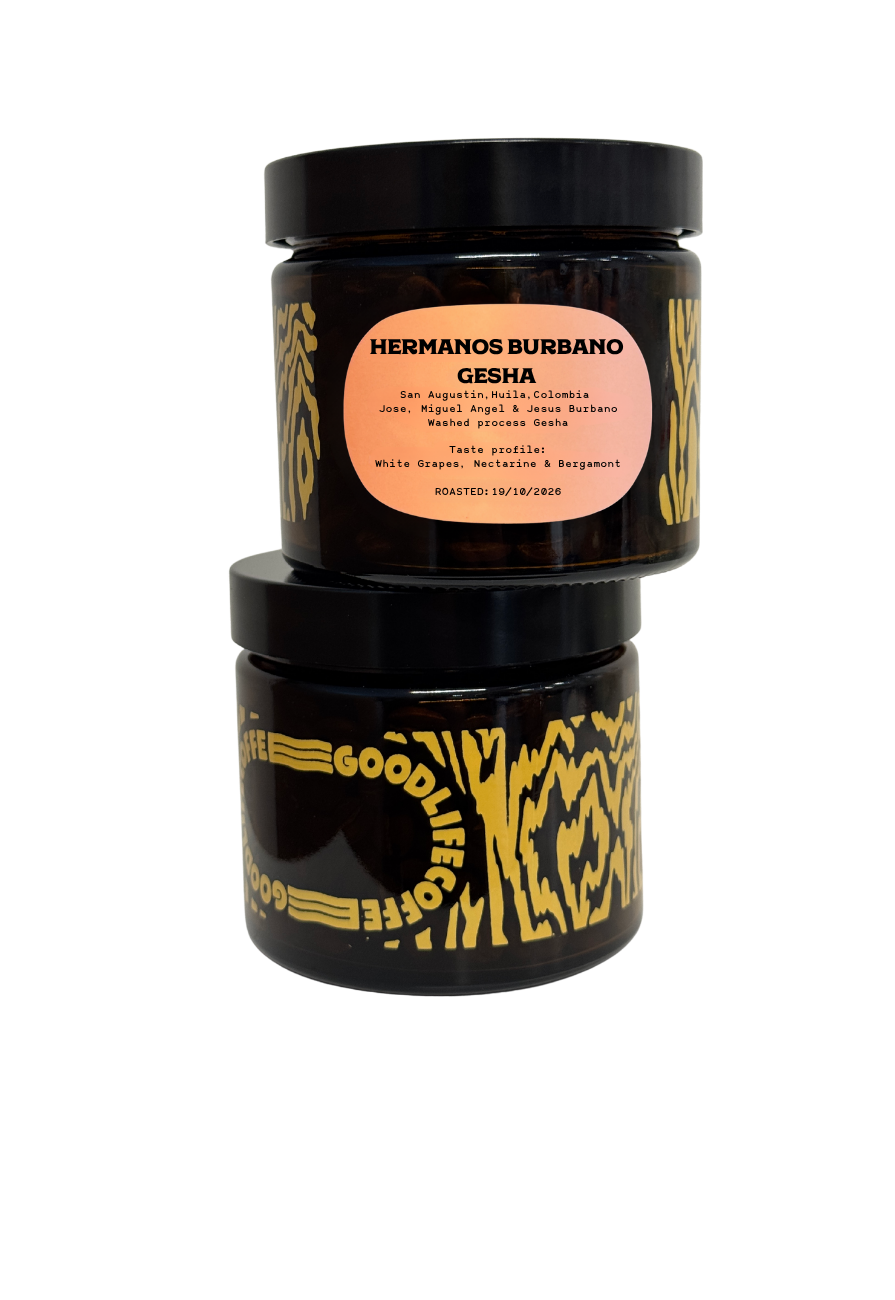
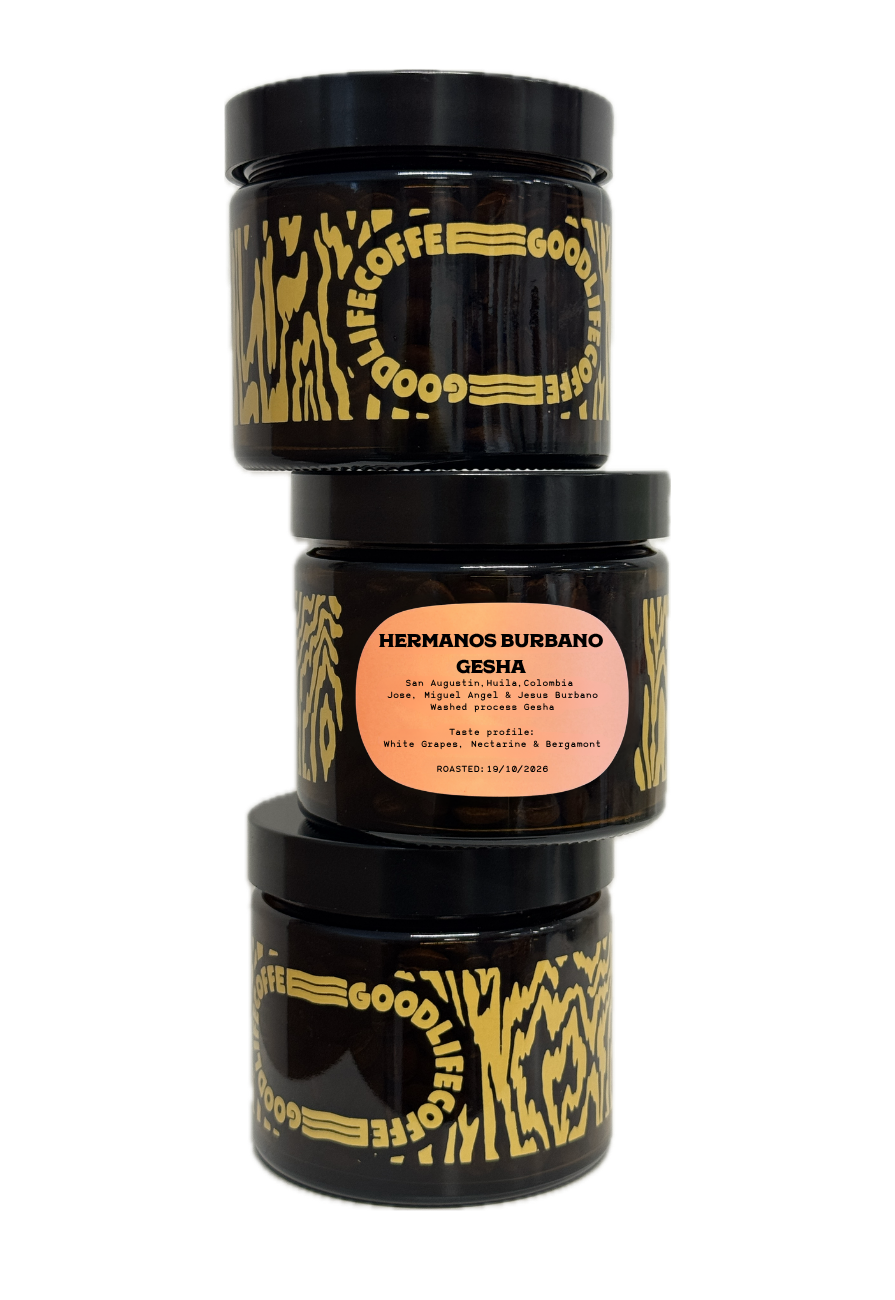
HERMANOS BURBANO GESHA, COLOMBIA 100g - FILTER COFFEE
Taste notes: White Grape, nectarine and bergamont
Country: Colombia
Field: San Agustín, Huila
Producer: Hermanos Burbano
Processing: Washed
Varieties: Gesha
Altitude: 1930m
Harvest: 01-03/2026
FOB price: $8.48 USD/lb
Hermanos Burbano
Colombia, Huila, San Augustin
Washed Gesha
Clean, complex and elegant
White grape, nectarine and begamnont
***
When ordring this coffee, we will send it from the 19th of October roast date. Coffee comes in our 100g glass jar, or 1kg bag.
Three brothers, Jose, Miguel Ángel and Jesús Burbano, grow Gesha in Tabor, San Agustín, in southern Huila, at nearly two kilometres above sea level. The story began when the brothers’ uncle, Jaime Muñoz, offered Jose land to cultivate. Jose agreed on one condition: he would only do it together with his brothers. The deal was simple. Once costs are covered, 10% of the profits go to the landowner and the rest is split equally between the brothers.
From the start, the brothers wanted to do something different, so they invested in unusual varieties and made the most of their high-altitude conditions. They keep training and get support from an agronomist at every stage of cultivation. Alongside this Gesha, they have planted Pacamara, Chiroso, Sidra and Laurina, which will bear their first coffee cherries in the coming harvest (26/27).
The cherries are picked about every 20 days at peak ripeness and left to ferment overnight in a wooden hopper. The next morning they are de-pulped, and the beans go through a 72-hour wet fermentation. They are then rinsed four times and moved to raised drying beds. Once the moisture starts to recede from the parchment, the beans are piled for three days and then spread out evenly to dry for 21–29 days.
The brothers are part of Monkaaba, a community project of smallholder coffee farmers in San Agustín, southern Huila. It was founded by seven smallholder families and is led by Esnaider Ortega-Gómez and Didier Ortega.
Colombia is a famous coffee country, but most of its smallholders sell their coffee at market price or even below it. For many, that price doesn’t even cover their production costs. On the specialty market, success increasingly goes to wealthy landowners who can afford to experiment, rather than to smallholders whose families have grown coffee for generations.
Monkaaba’s answer is openness. During harvest, any farmer in the area can bring their coffee in to be roasted and cupped for free. The cupping is done blind with the farmer in the room, and they get direct feedback on how to improve quality. The goal is to help smallholders improve their knowledge, quality and profitability, and to build lasting, transparent trading relationships.
Our partner, the Canadian green coffee importer Semilla, started working with Monkaaba in 2020 with six producers. Today the network includes around 60 families, most of them young farmers under 35.